FG Directs Banks and Fintechs to Collect VAT on Service Fees
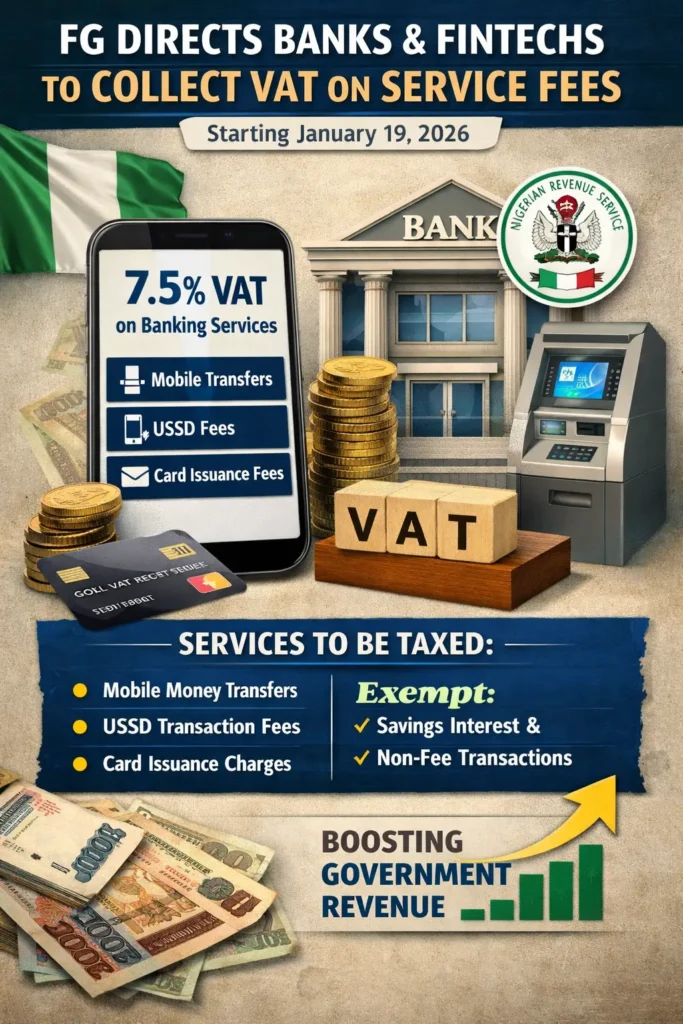
The Federal Government (FG) has instructed all banks and fintech companies to collect and remit a 7.5% Value-Added Tax (VAT) on certain electronic banking services, starting Monday, January 19, 2026. This directive aims to standardise VAT collection across Nigeria’s growing digital economy and increase government revenue.
Which Services Will Be Taxed?
The VAT will apply to specific electronic banking charges, including:
Mobile money transfers
USSD transaction fees
Card issuance fees
For instance, if a bank charges ₦100 for a transfer, a ₦7.50 VAT will be added to the service fee — not the amount being sent.
Services that remain exempt include:
Interest earned on savings or deposit accounts
Other non-fee-based transactions
“From Monday, January 19, 2026, we are required to collect a 7.5% VAT, to be remitted to the Nigerian Revenue Service (formerly FIRS). VAT will apply to certain banking services such as mobile transfers, USSD fees, and card issuance charges.”- According to an email notice shared with customers by Moniepoint,
Moniepoint emphasised that this is not a price increase, but a statutory requirement. Other banks and fintechs are expected to issue similar notifications to their customers soon.
The Nigerian Revenue Service (NRS) has set deadlines for commercial banks, microfinance banks, and electronic money operators to comply. All VAT collected must be clearly itemised on transaction statements, ensuring transparency.
Background: Stamp Duty and Previous Charges
In December 2025, banks began deducting ₦50 stamp duty on electronic transfers of ₦10,000 and above, following provisions of the new Tax Act. Previously called EMTL, this charge is now formally classified as stamp duty and applies as a one-off fee on qualifying electronic transfers.
Conclusion
The new VAT rule is part of the government’s effort to streamline taxation on digital financial services. While it adds a small fee to service charges, it does not affect the money customers send or earn in interest. Nigerians should expect transparent statements showing VAT deductions and remain assured that this move strengthens compliance and supports national revenue growth.