Beautiful Nubia Accuses Ayefele, BBO of Copyright Infringement
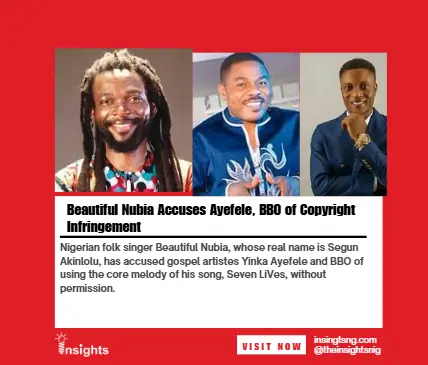
Nigerian folk singer Beautiful Nubia, whose real name is Segun Akinlolu, has accused gospel artistes Yinka Ayefele and BBO of using the core melody of his song, Seven LiVes, without permission.
In a post shared on X, the veteran singer alleged that Ayefele’s 2012 song, My Faith in God (Igbagbo Ireti), and BBO’s 2026 release, Amin, were built around the same melody from his original work.
What Beautiful Nubia is saying
The singer expressed deep concern over what he described as a repeated pattern of copyright abuse, especially within the gospel music community.
“There was Yinka Ayefele with ‘My Faith in God (Igbagbo Ireti)’ in 2012 and now someone called BBO with ‘Amin’ this year. Both stole their melodies from our original song ‘Seven Lifes’. When will Nigerians (especially the so-called gospel musicians) learn to respect copyright?”
As of the time of reporting, neither Ayefele nor BBO has publicly responded to the allegation.
Why this issue concerns every Nigerian creator
This case is not just about one song. It highlights a bigger problem many Nigerian musicians, writers and producers face — weak respect for intellectual property.
When original work is copied without permission or credit, creators lose income, recognition and motivation. For young and independent artistes, this can destroy their chances of growing a sustainable career in the creative industry.
A growing trend of copyright disputes
Beautiful Nubia’s complaint also adds to recent disputes in Nigeria’s gospel music space. In 2024, gospel singer Sinach faced a legal claim over her global hit Way Maker, after a producer alleged co-authorship. She denied the claim and maintained she was the sole writer.
What Nigerians can learn from this
For artistes, churches, music producers and event organisers, this situation is a reminder to:
- properly clear songs before recording or releasing them,
- respect songwriting credits, and
- document creative agreements early.
If Nigeria wants a stronger and fair creative economy, copyright must be taken seriously. Protecting original ideas is not only about law — it is about respecting the people whose creativity keeps the industry alive.