How to Create a Weekly Budget That Actually Works: A Simple Guide to Managing Your Money
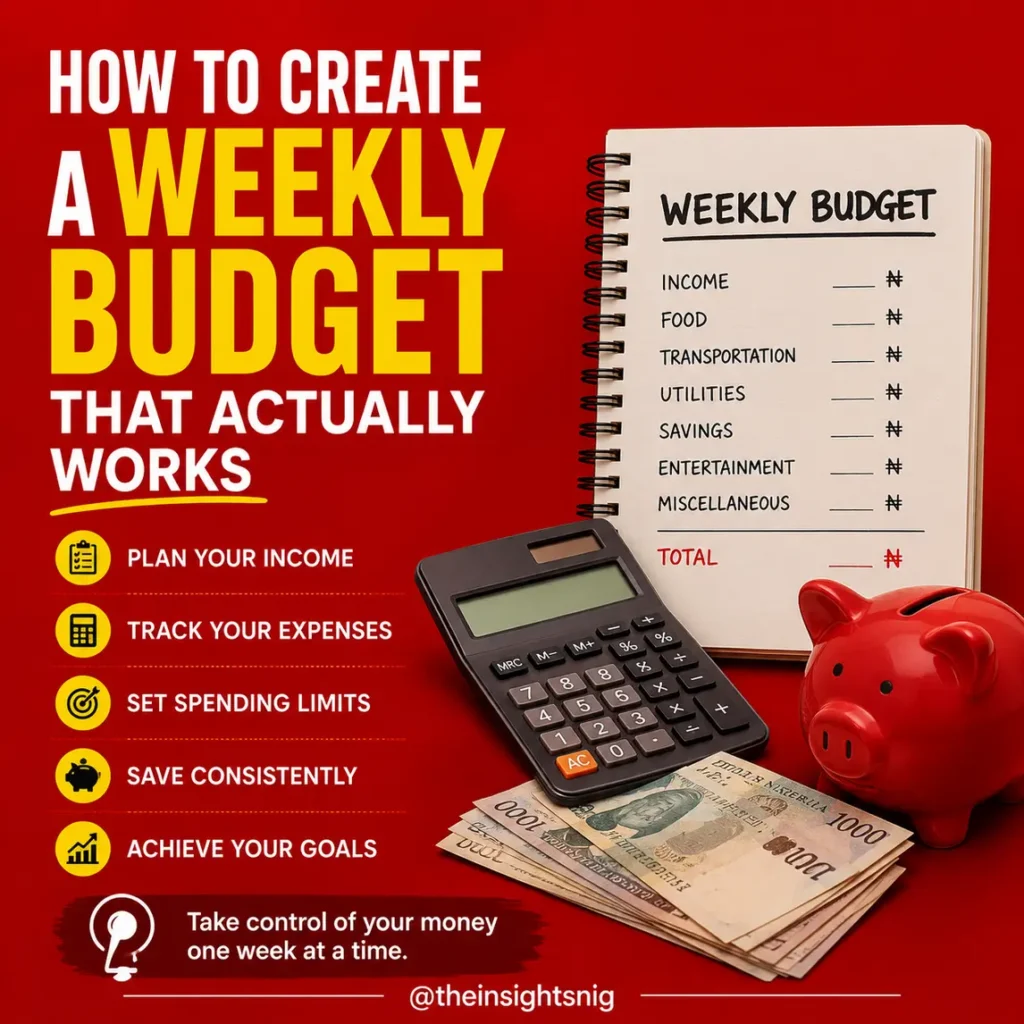
Managing your money doesn’t have to be difficult. A weekly budget is one of the easiest ways to stay in control of your finances, avoid unnecessary spending, and save towards your goals. Instead of wondering where your money went at the end of the month, a weekly budget helps you track every naira and make smarter financial decisions.
Whether you’re a salary earner, student, entrepreneur, or freelancer, creating a weekly budget can help you reduce financial stress and build better money habits.
Why a Weekly Budget Is Important
A weekly budget breaks your monthly income into smaller, manageable portions. This makes it easier to control spending and adjust when unexpected expenses arise.
Some key benefits include:
- Prevents overspending.
- Helps you save consistently.
- Makes it easier to pay bills on time.
- Reduces financial stress.
- Keeps you focused on your financial goals.
“A budget is not about limiting yourself—it’s about giving every naira a purpose.”
Step 1: Know Your Weekly Income
Start by calculating how much money you receive each week. If you’re paid monthly, divide your monthly income by four to estimate your weekly spending limit.
Include income from:
- Salary
- Business profits
- Freelance work
- Side hustles
Step 2: List Your Essential Expenses
Write down everything you must pay for each week, such as:
- Food and groceries
- Transportation
- Rent (set aside a weekly portion)
- Electricity and internet
- School expenses
- Savings
- Debt repayments
Seeing these expenses on paper helps you understand where your money goes.
Step 3: Set Spending Limits
After covering your essential needs, decide how much you’ll spend on non-essential items like entertainment, shopping, and eating out.
A simple rule is to prioritise needs before wants.
Step 4: Track Every Expense
Record every purchase, no matter how small. You can use:
- A notebook
- Microsoft Excel
- Google Sheets
- Budgeting apps like Goodbudget: https://goodbudget.com/
- Money Manager: https://realbyteapps.com/
Tracking your spending helps you identify habits that may be draining your finances.
Step 5: Build an Emergency Fund
Life is unpredictable. Set aside a small amount each week for emergencies such as medical bills, repairs, or unexpected travel.
Even saving ₦2,000–₦5,000 weekly can make a big difference over time.
Step 6: Review Your Budget Every Weekend
At the end of each week, ask yourself:
- Did I stay within my budget?
- What unnecessary expenses can I reduce?
- How much did I save?
Reviewing your progress helps you improve your budgeting skills every week.
Helpful Budgeting Resources
To learn more about budgeting and personal finance, visit:
- Consumer Financial Protection Bureau (Budgeting Guide): https://www.consumerfinance.gov/consumer-tools/budgeting/
- Investopedia – Budgeting Basics: https://www.investopedia.com/budgeting-4689825
Creating a weekly budget is one of the smartest financial habits you can develop. It helps you spend wisely, prepare for emergencies, and achieve your financial goals with confidence. Remember, budgeting isn’t about restricting yourself—it’s about making your money work for you. Start this week, stay consistent, and watch your financial future improve one week at a time.