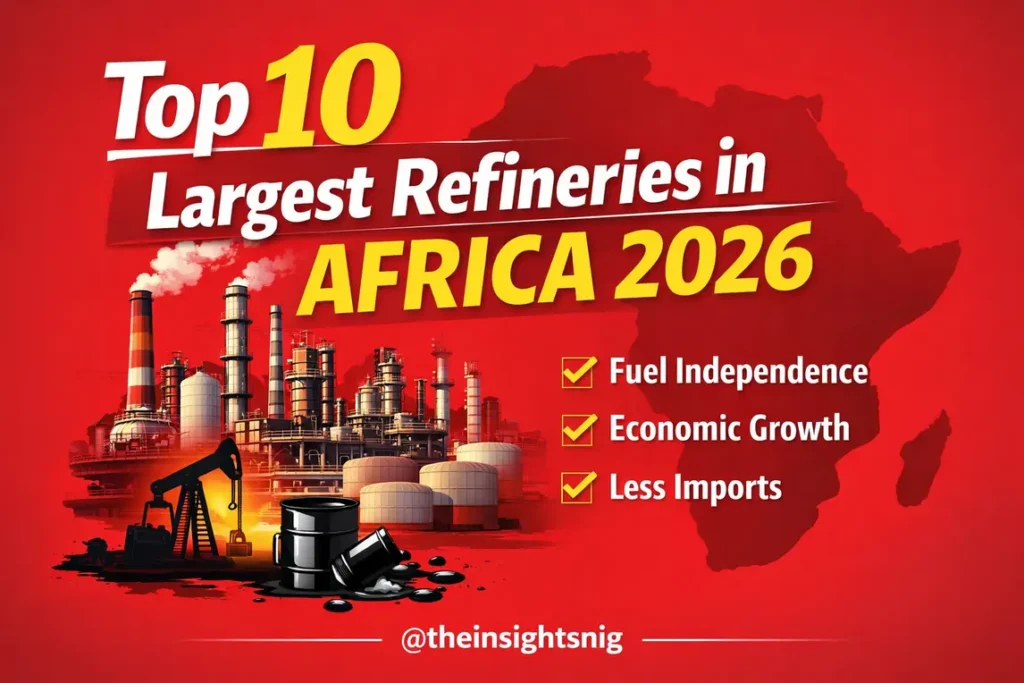
Top 10 Largest Refineries in Africa 2026: How the Continent Is Reducing Fuel Imports and Building Energy Independence
Africa’s oil and gas sector is entering a powerful new era in 2026. Despite holding nearly 8% of the world’s proven crude oil reserves, the continent has long struggled with one major challenge: low refining capacity.
For decades, many African countries exported crude oil but imported refined petroleum products like petrol, diesel, aviation fuel, and kerosene at huge costs. This imbalance has cost the continent between $60 billion and $90 billion yearly in fuel imports, weakening local currencies and increasing pressure on government budgets.
Now, things are beginning to change.
With the rise of mega projects like Nigeria’s Dangote Group Dangote Refinery, Algeria’s Sonatrach network, and Egypt’s modern refining hubs, Africa is gradually moving toward energy self-sufficiency.
This list of the Top 10 largest refineries in Africa in 2026 is more than just a ranking. It shows where industrial power is growing and how stronger refining capacity can help reduce fuel scarcity, create jobs, and stabilize prices.
Why This Ranking Matters to Africans
The importance of large refineries goes beyond oil companies.
Better refinery output means:
Reduced petrol scarcity
Lower dependence on imports
More stable fuel prices
Job creation in engineering and logistics
Increased government revenue
Better foreign exchange savings
Growth in petrochemicals and manufacturing
For countries like Nigeria, Libya, Algeria, Egypt, and South Africa, refinery growth directly impacts economic stability.
“Africa’s shift from exporting crude to refining more products locally is one of the most important economic transformations happening on the continent today.”
Kaduna Refinery, Nigeria – 110,000 Barrels Per Day
The Kaduna Refining and Petrochemical Company remain one of Nigeria’s most strategic energy assets, especially for northern fuel distribution. Located along KM 16 Kachia Road, the refinery was originally commissioned in 1980 with a daily processing capacity of 50,000 barrels before later expanding to 110,000 barrels per day.
Key Highlights
Serves northern Nigeria’s fuel demand
Includes fuel and lubricant processing units
Produces petrol, diesel, asphalt, waxes, and petrochemical feedstocks
Houses a linear alkyl benzene plant used for detergent production
Current Challenges
Despite its installed capacity, Kaduna Refinery has struggled with:
Aging infrastructure
Utility constraints
Long shutdown periods
Low utilization rates
Past throughput levels averaged around 40,000 barrels daily, showing significant underperformance. However, current rehabilitation plans aim to restore at least 60% operational efficiency.
Africa’s New Refining Leaders in 2026
The continent’s top refining giants now include:
Dangote Refinery, Nigeria – 650,000 bpd
Skikda Refinery I, Algeria
Sasol Refinery, South Africa
Ras Lanuf, Libya
Port Harcourt Refinery, Nigeria
Mostorod Refinery, Egypt
El Nasr Refinery, Egypt
Warri Refinery, Nigeria
Skikda Refinery II, Algeria
Kaduna Refinery, Nigeria
Nigeria’s Dangote facility currently leads the continent and is already helping ease fuel shortages across West, Central, and East Africa with exports running at full 650,000 barrels per day capacity.
What Nigerians and Africans Can Learn from This
The growth of refinery infrastructure teaches an important economic lesson:
Countries that process their raw materials locally earn more, create more jobs, and protect their economies from global shocks.
For everyday citizens, this can translate into:
cheaper fuel in the long term
reduced transport costs
lower inflation pressure
stronger industrial development
better business opportunities in logistics, chemicals, and manufacturing
This is why refinery rehabilitation and expansion should remain a top priority for African governments.
Africa’s largest refineries in 2026 represent more than industrial landmarks. They symbolize a major shift toward economic resilience, value addition, and reduced fuel import dependence.
While challenges like aging infrastructure and low utilization still affect many facilities, new investments are changing the story.
From Kaduna to Lekki, Skikda to Cairo, the continent is steadily building the capacity to refine more of its own crude, keep more value at home, and strengthen energy security for millions of people.
The journey is still unfolding, but the direction is clear: Africa is refining its future.