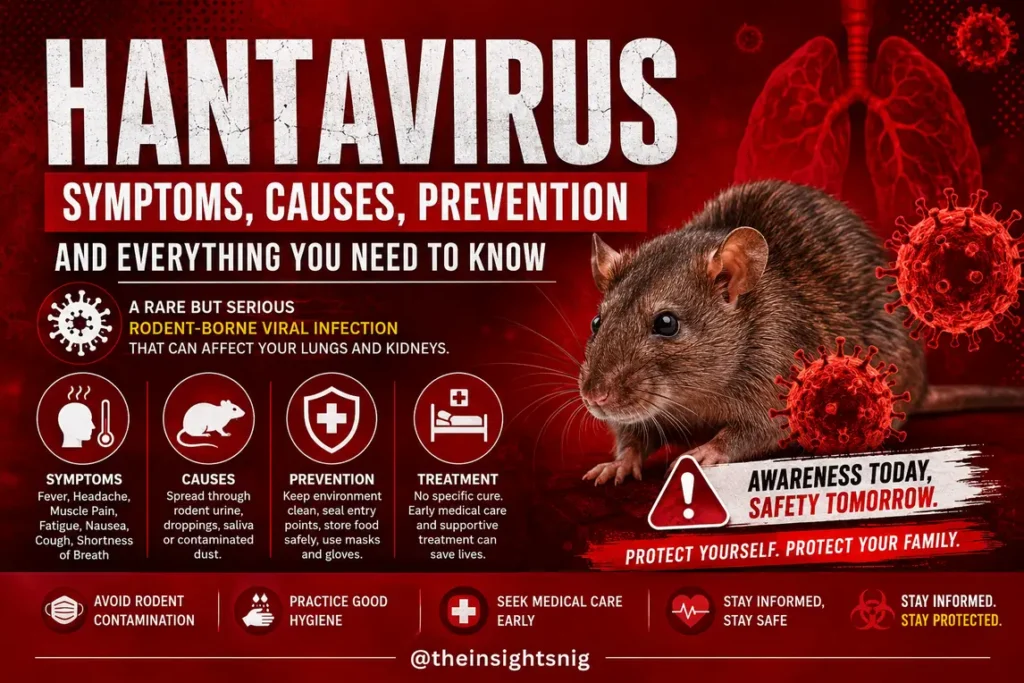
Hantavirus: Symptoms, Causes, Prevention, and Everything You Need to Know
Understanding Hantavirus and Why Awareness Matters
Hantavirus is a rare but dangerous viral infection that spreads mainly through contact with infected rodents such as rats and mice. Although cases are uncommon in many parts of the world, health experts continue to warn people about the disease because severe infections can lead to life-threatening complications affecting the lungs and kidneys.
In recent years, public interest in hantavirus has increased as people seek to understand emerging infectious diseases and how to protect themselves and their families.
According to the Centers for Disease Control and Prevention (CDC)
, hantavirus infections can become severe very quickly if medical attention is delayed.
What Is Hantavirus?
Hantavirus refers to a group of viruses carried by rodents. Humans can become infected when they inhale tiny particles contaminated with rodent urine, saliva, or droppings.
The disease was first widely recognized in 1993 during an outbreak in the United States. Since then, cases have been reported in different regions worldwide.
The World Health Organization (WHO)
explains that different strains of hantavirus exist across the Americas, Europe, and Asia.
How Hantavirus Spreads
Hantavirus is commonly spread through:
Breathing in contaminated dust
Touching surfaces contaminated by rodents
Eating food exposed to infected rodents
Rodent bites in rare situations
Most hantavirus strains do not spread easily from person to person. However, health experts still encourage proper hygiene and environmental sanitation.
Places Where Infection Can Occur
People may be exposed in:
Dirty storage rooms
Abandoned buildings
Farms and barns
Rodent-infested homes
Campsites and cabins
Symptoms of Hantavirus
Symptoms usually appear between one and eight weeks after exposure.
Early Symptoms
The first signs may resemble flu or malaria:
Fever
Headache
Chills
Muscle aches
Fatigue
Nausea
Vomiting
Severe Symptoms
As the infection worsens, some people may develop:
Difficulty breathing
Chest pain
Persistent cough
Low blood pressure
Kidney complications
In severe cases, the lungs may fill with fluid, making breathing difficult.
Types of Hantavirus Diseases
1. Hantavirus Pulmonary Syndrome (HPS)
This form mainly affects the lungs and is more common in North and South America.
Symptoms can progress rapidly and may require emergency medical care.
2. Hemorrhagic Fever with Renal Syndrome (HFRS)
This form is more common in parts of Europe and Asia and mainly affects the kidneys.
Who Is Most at Risk?
People at higher risk include:
Farmers
Cleaners
Construction workers
Campers and hikers
People living in rodent-infested environments
Individuals cleaning dusty areas with rodent droppings without protection may face increased risk.
How Doctors Diagnose Hantavirus
Doctors may diagnose hantavirus through:
Blood tests
Medical history
Symptom evaluation
Exposure history to rodents
Early diagnosis is important because symptoms can worsen suddenly.
Treatment for Hantavirus
Currently, there is no specific antiviral cure for hantavirus infection.
Treatment focuses on supportive medical care, including:
Oxygen therapy
Fluids management
Intensive care support
Ventilator support in severe cases
The Mayo Clinic
states that early hospitalization greatly improves survival chances.
How to Prevent Hantavirus
Prevention mainly involves reducing contact with rodents.
Important Prevention Tips
Keep homes clean and dry
Seal holes and openings in buildings
Store food properly
Dispose of waste correctly
Wear gloves and masks when cleaning rodent droppings
Spray disinfectant before cleaning contaminated areas
Avoid sweeping dry rodent droppings directly because this can release virus particles into the air.
The Importance of Public Health Awareness
Health experts continue to emphasize public education on environmental hygiene and rodent control. Awareness can help communities reduce the spread of rodent-borne diseases and respond quickly to symptoms.
“Prevention remains the strongest defense against hantavirus infections, especially through proper sanitation and rodent control.”
Hantavirus may be rare, but it is a serious disease that should not be ignored. Understanding how the virus spreads, recognizing the symptoms early, and maintaining proper hygiene can help save lives.
As global health awareness continues to grow, individuals and communities must prioritize cleanliness, safe food storage, and rodent control measures to reduce the risk of infection.