Government Empowerment Schemes in 2026: Opportunities, Benefits, and How to Access Them
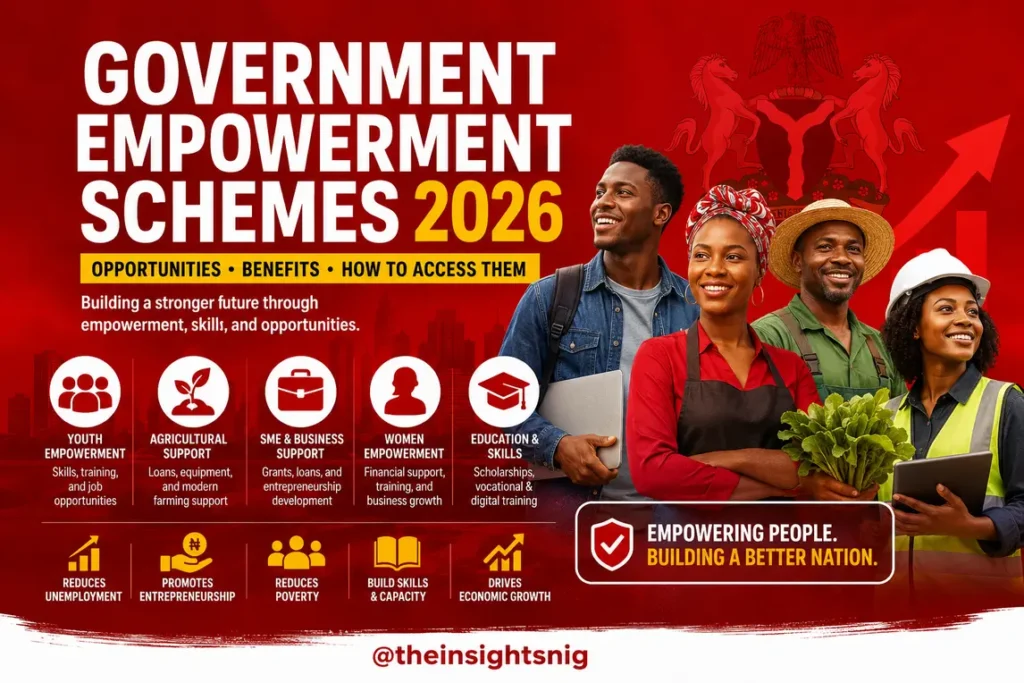
Government empowerment schemes in 2026 continue to play a major role in reducing poverty, supporting small businesses, and creating job opportunities across developing economies. These programs are designed to provide financial support, vocational training, and business opportunities to citizens who need help building sustainable livelihoods.
In Nigeria and many other countries, empowerment initiatives remain a key strategy for addressing unemployment, boosting entrepreneurship, and improving economic stability.
For official updates on social investment initiatives in Nigeria, you can explore the National Social Investment Programme Agency (NSIPA): https://nsipa.gov.ng/
What Are Government Empowerment Schemes?
Government empowerment schemes are structured programs created by federal, state, or local governments to support citizens financially or through skill development.
They aim to:
Reduce unemployment
Promote entrepreneurship
Improve education and vocational skills
Support agriculture and small businesses
Reduce poverty levels
According to the World Bank, social protection and empowerment programs are essential tools for reducing inequality and improving economic resilience: https://www.worldbank.org/en/topic/socialprotection
Types of Government Empowerment Schemes in 2026
1. Youth Empowerment Programs
Youth empowerment remains a priority in 2026 due to rising unemployment rates in many regions.
These programs include:
Digital skills training
Tech and innovation bootcamps
Startup funding opportunities
Internship and job placement schemes
Many of these initiatives are managed under national social investment structures like NSIPA: https://nsipa.gov.ng/
2. Agricultural Empowerment Schemes
Agriculture continues to be a major focus for economic development.
Support typically includes:
Farming loans and grants
Fertilizer and equipment subsidies
Training on modern farming methods
Rural development programs
For example, Nigeria’s FarmerMoni initiative supports smallholder farmers with financial assistance:
3. SME and Business Support Programs
Small and medium enterprises (SMEs) receive significant government attention because they drive job creation.
Support includes:
Interest-free or low-interest loans
Business grants
Entrepreneurship training
Market access support
One example is the Government Enterprise and Empowerment Programme (GEEP), which provides micro-loans to traders and small business owners:
4. Women Empowerment Schemes
Women empowerment initiatives aim to improve financial independence and entrepreneurship opportunities for women.
These programs offer:
Trading support funds
Vocational training
Cooperative loans
Business mentorship
A major example is Nigeria’s national women empowerment initiatives supported by development partners and government agencies:
5. Education and Skill Development Programs
Education-focused empowerment schemes help citizens acquire employable skills.
They include:
Scholarships
Free vocational training
Digital learning programs
Technical skills development
These programs are often linked with broader social investment strategies under agencies like NSIPA: https://nsipa.gov.ng/
Benefits of Government Empowerment Schemes
Government empowerment programs in 2026 provide several key benefits:
✔️ Reduced unemployment
✔️ Increased entrepreneurship
✔️ Poverty reduction
✔️ Skills development
✔️ Economic growth
The World Bank highlights that social protection programs significantly improve long-term economic stability and reduce inequality: https://www.worldbank.org/en/topic/socialprotection
Challenges Facing Empowerment Programs
Despite their importance, empowerment schemes face challenges such as:
Poor awareness among citizens
Corruption and mismanagement in some cases
Limited funding
Difficult application processes
Rural access limitations
Efforts are ongoing to improve transparency and digital access through official platforms like NSIPA: https://nsipa.gov.ng/
How to Access Government Empowerment Schemes in 2026
To apply successfully:
Visit only official government websites
Check eligibility requirements carefully
Prepare valid documents (ID, business details, etc.)
Apply through verified portals only
Avoid fake agents and scams
Always verify opportunities through official platforms such as:
“Empowerment is not just financial support—it is the creation of opportunity, dignity, and long-term independence.”
Government empowerment schemes in 2026 remain essential tools for economic development and poverty reduction. When properly accessed, they provide citizens with financial support, skills training, and opportunities to build sustainable livelihoods.
Staying informed through official sources and verified platforms is the best way to avoid scams and benefit fully from these programs.