Children’s Day 2026: FG Promises Equal Opportunities and Inclusive Education for Every Nigerian Child
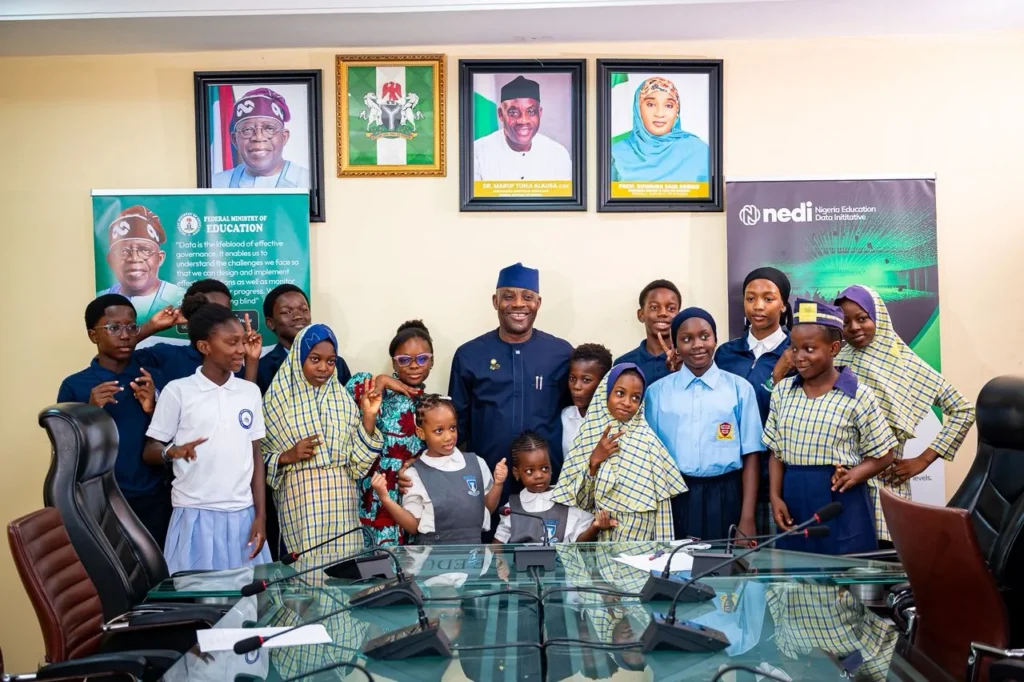
Minister of Education, Maruf Alausa, hosting children from different schools in Abuja. Photo credit: Ministry of Education
FG Reaffirms Commitment to Quality Education and Equal Opportunities for Nigerian Children
As Nigeria celebrates the 2026 Children’s Day, the Federal Government has renewed its promise to ensure that every Nigerian child has access to quality and inclusive education regardless of background, disability, or social status.
The Minister of Education, Maruf Alausa, made this known while hosting children from different schools and communities at the Federal Ministry of Education headquarters in Abuja.
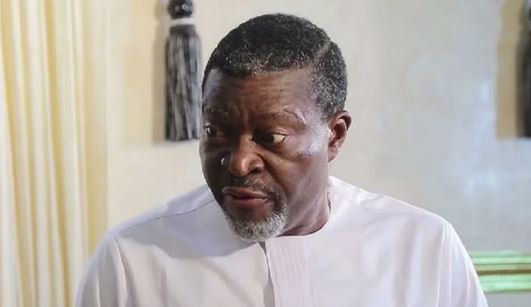
The event also featured disability advocate and actress Dera Osadebe, whose advocacy for children living with disabilities and autism was highly praised during the celebration.
According to the ministry, the programme was organised to promote the voices of Nigerian children while encouraging policies that support child development, inclusive learning, and equal opportunities nationwide.
Every Nigerian Child Deserves Equal Opportunities
Speaking during the event, the minister described Children’s Day as more than just a celebration, stating that it serves as a reminder of the country’s responsibility to invest in children through education, protection, healthcare, and empowerment.
“Every Nigerian child deserves to feel seen, heard, encouraged, and supported to achieve their dreams regardless of background or circumstance,” the minister stated.
He added that children remain the foundation of Nigeria’s future and should be given the right environment to learn, grow, and succeed.
The government also stressed that children with disabilities must not be left behind in access to education and opportunities.
How Nigerian Children and Parents Can Benefit from These Government Programmes
The Federal Government’s renewed focus on inclusive education and child development means more opportunities may become available for children across Nigeria through public schools, learning initiatives, scholarships, and youth empowerment programmes.
Here are ways families can position themselves to benefit:
1. Enrol Children in Government-Approved Schools
Parents are encouraged to enrol their children in registered public or approved private schools to gain access to future government educational support programmes.
2. Follow Education Announcements
Families should regularly monitor updates from the Federal Ministry of Education for information about:
Scholarships
Free learning programmes
Digital education initiatives
Disability support programmes
School feeding and welfare schemes
3. Obtain Important Child Documents
Parents should ensure children have:
Birth certificates
NIN where applicable
School identification records
These documents are often required for government educational benefits and support programmes.
4. Encourage Children to Develop Their Talents
The minister advised children to remain confident and continue building their talents, creativity, and leadership skills.
Children can participate in:
School competitions
Creative arts
Technology and coding programmes
Reading clubs
Sports and leadership initiatives
These opportunities may open doors to scholarships and national recognition.
5. Support Inclusion for Children Living with Disabilities
Parents and guardians of children with disabilities are encouraged to seek inclusive learning environments and support groups that promote equal access to education.
Government and advocacy groups are increasingly creating awareness and support systems for children with autism and other special needs.
Government’s Renewed Hope Agenda for Children
The minister explained that the initiative aligns with the Renewed Hope Agenda of Bola Ahmed Tinubu, which focuses on:
Child development
Youth empowerment
Inclusive education
Equal learning opportunities
Safe learning environments
The Federal Ministry of Education also reaffirmed its commitment to policies that protect the rights, safety, and well-being of Nigerian children.
Why This Matters to Nigerians
Access to quality education can help reduce poverty, unemployment, child labour, and social inequality in Nigeria. By supporting children early, families and communities can build a stronger future for the country.
Experts believe that when children receive proper education and support, they are more likely to become productive citizens who contribute positively to society.
The 2026 Children’s Day celebration serves as an important reminder that every child deserves access to education, support, and equal opportunities to succeed. The Federal Government’s renewed commitment to inclusive learning and child development offers hope for millions of Nigerian families.
Parents, guardians, schools, and communities also have a role to play by supporting children, nurturing their talents, and staying informed about government programmes that can improve their future.