There’s a Lassa Fever Outbreak in Nigeria — This Is What You Need to Know
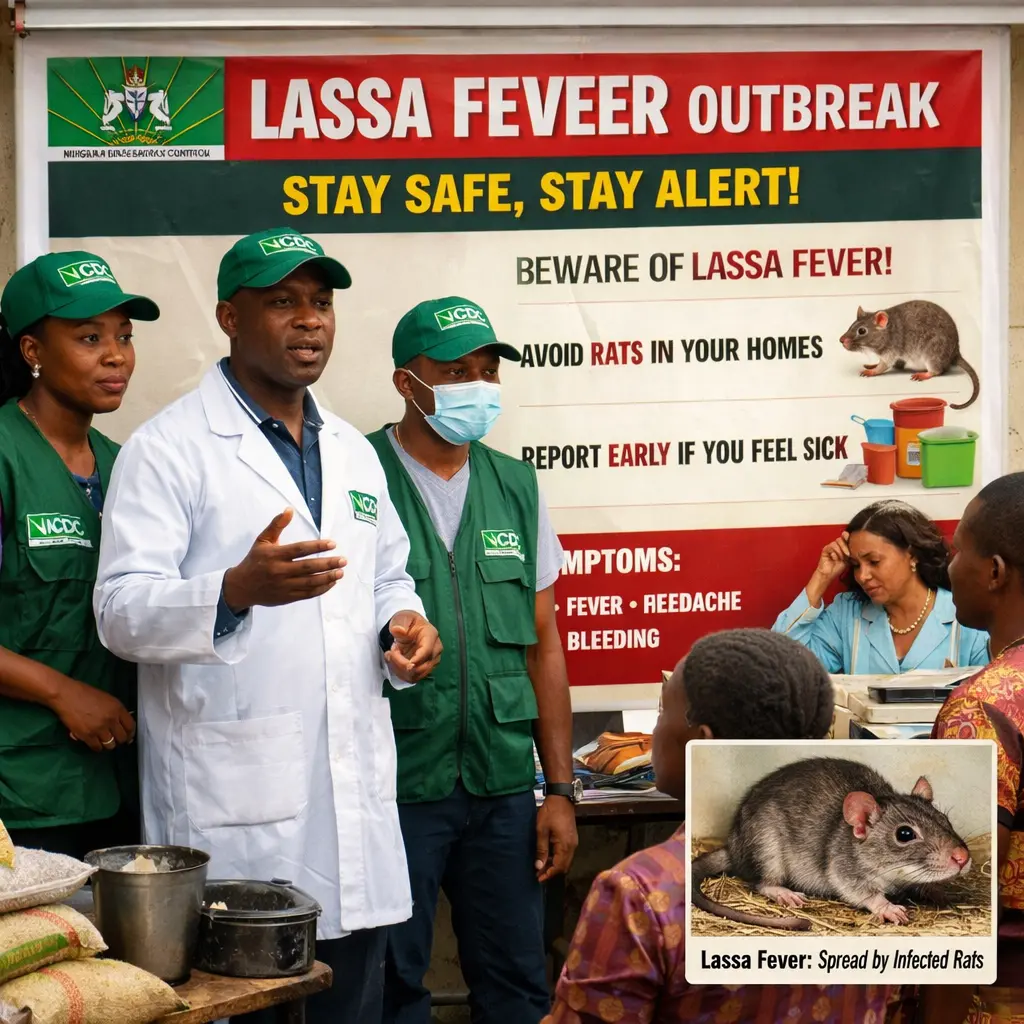
Nigeria is currently experiencing a Lassa fever outbreak, with confirmed cases reported in several states, including Plateau, Bauchi, Ondo, Edo, Taraba, Ebonyi, Benue, Nasarawa and others. Recent health updates show new infections and deaths across multiple states, with the Nigeria Centre for Disease Control (NCDC) actively responding to the situation.
Lassa fever is an acute viral illness endemic in parts of West Africa, including Nigeria. The virus spreads mainly through contact with the urine, droppings and body fluids of infected rats (specifically the Mastomys species), and can also spread from person to person in close contact settings or where infection prevention is weak.
Symptoms to Watch Out For
Early symptoms of Lassa fever can be like common illnesses like malaria or typhoid. Key signs include:
- Fever and persistent headache
- Sore throat or cough
- Vomiting or nausea
- Muscle and joint pains
- (In severe cases) bleeding, difficulty breathing or swelling
If symptoms do develop, especially fever that doesn’t get better with usual treatment, seek medical help immediately. Early care significantly improves chances of survival.
How to Stay Safe – Practical Steps
Here are ways you and your community can protect yourselves:
1. Reduce Exposure to Rats
- Keep homes and surroundings clean and free of food scraps.
- Store grains and food items in rodent-proof containers.
- Dispose of waste far from living areas.
- Seal holes and gaps in walls and roofs to block rats. ([Reddit][3])
2. Personal and Household Hygiene
- Wash hands often with soap and water.
- Avoid touching rodent droppings or urine with bare hands.
- Clean utensils and surfaces frequently.
3. Seek Early Care
If you or someone in your home gets a fever or unusual symptoms, go to a health facility early, not waiting for it to get worse. This can be lifesaving.
4. Support Local Health Messages
Stay informed through NCDC advisories, radio, TV, and trusted social media pages. Participate in community clean-up campaigns and help raise awareness.
“The fight against Lassa fever requires collective action — early detection, strong community hygiene, and prompt treatment are key to reducing loss of life.” – Public health specialist (NCDC guidance)
Lassa fever outbreak is real, and Nigeria’s public health authorities are responding. While there’s no licensed vaccine yet, you and your community can reduce risk by maintaining hygiene, controlling rodents, and acting fast if symptoms appear. Stay aware, stay clean, and don’t delay seeking help when needed.