From Local Hustle to Global Markets: How Nigerians Can Win Big from Global Trade Expansion
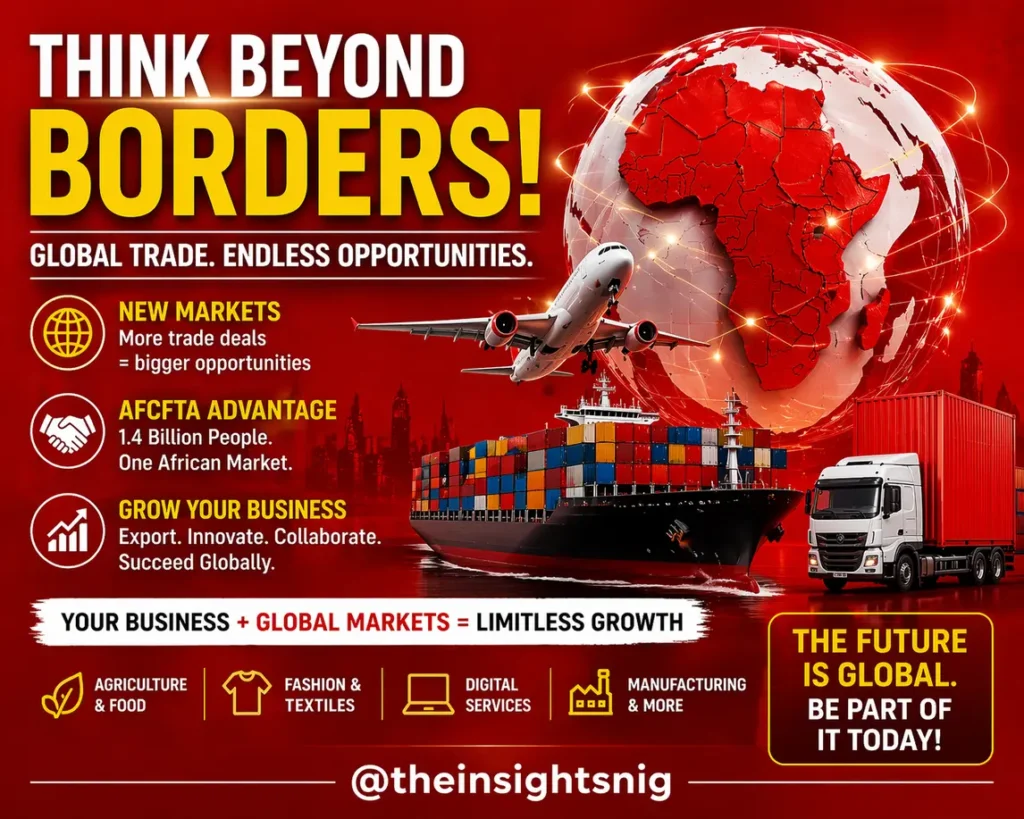
Global trade expansion is creating new markets for Nigerians. Discover how AfCFTA, export opportunities, and cross-border trade can help you grow your business in 2026.
Understanding the Shift: A New Era of Global Trade
Global uncertainty—from economic shocks to geopolitical tensions—is pushing countries to form new trade alliances and partnerships. While this may sound like a challenge, it is opening doors for emerging economies like Nigeria.
According to global trade reports, international trade remains strong despite challenges, with exports reaching over $26 trillion globally in recent years.
At the center of Africa’s opportunity is the African Continental Free Trade Area (AfCFTA)—a game-changing agreement connecting over 1.4 billion people and a $3.4 trillion market.
Why Trade Expansion Matters for Nigerians
1. Access to Bigger Markets
AfCFTA eliminates tariffs on up to 90% of goods, making it easier for Nigerian businesses to sell across Africa.
2. Increased Jobs and Income
The agreement is expected to:
Create millions of jobs
Boost wages and reduce poverty across Africa
3. More Investment Opportunities
Foreign investors are more likely to fund African businesses due to:
Larger unified markets
Improved trade systems
Key Insight:
Intra-African trade is projected to reach $230 billion by 2026, showing massive growth potential.
Nigeria’s Strategic Position in Global Trade
Nigeria is not just participating—it is positioning itself as a leader in African trade.
The government is identifying export products in all 774 local government areas
SMEs are being supported to access cross-border markets and partnerships
Trade policies are being strengthened for real economic results in 2026
“2026 must now be the year of disciplined execution.”
High-Potential Export Opportunities for Nigerians
Agriculture & Agro-Processing
Cassava, yam, palm oil, and processed foods are in high demand across Africa
Value-added products bring higher profits
Fashion & Textiles
African fashion is gaining global attention
Nigerian brands can scale across African markets
Digital Services
Freelancing, tech services, and digital marketing can be exported globally
No shipping required—just skills and internet
Manufacturing & Creative Industry
Local production can now reach multiple African countries
Creative content (music, film, art) is also exportable
Practical Steps to Start Benefiting Today
- Learn Export Business Basics
Understand:
Packaging and standards
Pricing and logistics
Cross-border regulations
- Leverage AfCFTA Programs
Apply for SME matchmaking and trade programs
Attend trade fairs and networking events
Example: Explore AfCFTA SME Opportunities
- Build Export-Ready Products
Focus on:
Quality
Branding
Scalability
- Use Digital Platforms
Sell services globally (Fiverr, Upwork, etc.)
Promote products through social media
- Partner for Growth
Collaborate with logistics companies
Work with export agencies and NGOs
Challenges to Watch Out For
While opportunities are huge, be aware of:
Export regulations and compliance requirements
Logistics and transportation costs
Competition from other African countries
Understanding rules of origin and trade standards is key to success.
Think Beyond Nigeria
Global trade is no longer limited to big corporations. With AfCFTA and new trade partnerships, every Nigerian entrepreneur, student, and business owner can access international markets.
The real question is not whether opportunities exist—but whether you are ready to take them.
The future belongs to those who think beyond borders.